Special sessions
In addition to submissions about general LION themes, we also welcome submissions
related to one of our
special sessions. The special sessions will be part of the regular conference and are
subject to the
same peer-review as all other submissions.
If your paper is submitted for a special session, remember to mention it in the paper with a line after the title ("Submitted to special session...") and indicate the submission number to the session chairs.
Special session 1: AI-Driven Optimization: Transforming Optimization with LLMs
Organizers:
Lin Xie^1, Yingqian Zhang ^2, and Yaoxin Wu^2
1 Chair of Information Systems and Business Analytics, Brandenburg University of Technology, Germany (email: lin.xie@b-tu.de)
2 Eindhoven University of Technology, Netherlands
Abstract:
Large Language Models (LLMs) are emerging as powerful tools for optimization, complementing and extending traditional methods. Their ability to understand problem descriptions, generate heuristics, and support human-in-the-loop decision making opens new possibilities for modeling and solving complex real-world problems. This session invites contributions on how LLMs and related AI techniques can be applied to domains such as logistics, scheduling, energy systems, and finance. Topics of interest include AI-assisted problem formulation, heuristic discovery, end-to-end methods, hybrid approaches that combine LLMs with classical algorithms, and practical applications that demonstrate their impact. Special attention will be given to challenges of scalability, interpretability, and reliability in operational settings. The session aims to bring together researchers and practitioners to explore how LLMs can transform optimization research and practice.
Special session 2: Matheuristics
Organizers:
Vittorio Maniezzo, Department of Computer Science, Univ. of Bologna, Italy, vittorio.maniezzo@unibo.it
Roberto Montemanni, Dept. of Sciences and Methods for Engineering, Univ. of Modena and Reggio Emilia, Italy - roberto.montemanni@unimore.it
Abstract:
Matheuristics — methods that leverage mathematical programming in heuristic contexts — have emerged as a powerful approach for solving complex optimization problems across a broad range of domains. As learning techniques and optimization models converge, new opportunities arise for approaches that combine solution quality, robustness, and scalability.
This special session brings together researchers and practitioners from operations research, machine learning, and artificial intelligence to discuss advancements, challenges, and applications of matheuristics in the era of data-driven decision-making. We invite contributions that either advance matheuristic methodologies or demonstrate their impact in practical settings, with the aim of bridging mathematical rigor and heuristic flexibility.
Topics of interest include novel hybrid designs, learning-enhanced matheuristics, decomposition and surrogate-based strategies, benchmarking studies and applications in logistics, energy, finance, and other domains.
Special session 3: Learning to Optimize: RL as an optimizer
Organizers:
Konstantinos Chatzilygeroudis, Laboratory of Automation and Robotics (LAR), University of Patras, Greece - costashatz@upatras.gr
Konstantinos Asimakopoulos, Laboratory of Automation and Robotics (LAR), University of Patras, Greece
Abstract:
Can optimizers themselves be learned? Traditional solvers must re-solve from scratch every time even within families of very familiar problems. Typically the user needs to hand-design heuristics such as step sizes, branching rules etc. Another interesting way to approach this is to use reinforcement learning (RL) to learn decision rules that guide an optimization process across families of problem instances. In this special session, we invite research where RL discovers update rules, search heuristics, or branching strategies that outperform hand-crafted counterparts on families of problems.
Special session 4: Learning and Optimization under Uncertainty for
Dynamic Autonomous Navigation
Organizers:
Carolina Crespi, Department of Mathematics and Computer Science, University of Catania –
carolina.crespi@unict.it
Alessio Mezzina, Department of Mathematics and Computer Science, University of Catania –
alessio.mezzina@phd.unict.it
Mario Pavone, Department of Mathematics and Computer Science, University of Catania –
mpavone@dmi.unict.it
Abstract:
Dynamic autonomous navigation is a challenging problem at the intersection of optimization, machine
learning, and artificial intelligence. Real-world applications, such as robotics, autonomous vehicles,
and, in general, exploration of unknown or evolving environments require intelligent agents to adapt in
real time to incomplete information, uncertain dynamics, and limited resources. These problems
naturally fall under the scope of hard optimization, where classical methods often need to be extended
or combined with learning strategies to achieve robust and scalable solutions.
This special session focuses on novel models, algorithms, and learning-based approaches to address
uncertainty and complexity in autonomous navigation. It welcomes contributions on advanced
optimization techniques, machine learning methods for decision-making, and hybrid systems that
combine both. The session encourages work that emphasizes experimental methodologies,
performance evaluation, and the application of results to real-world case studies. Covering both
theoretical developments and practical implementations, it aims to advance the understanding of how
optimization and learning can eDectively address the challenges of dynamic, uncertain, and multi-agent
navigation scenarios.
Keywords:
Optimization under uncertainty,
Machine learning for optimization,
Dynamic autonomous navigation,
Real-time decision-making,
Multi-agent systems
Topics of Interest:
Relevant topics include, but are not limited to:
Learning-based optimization methods for uncertain and dynamic environments,
Adaptive and real-time decision-making algorithms,
Hybrid approaches combining optimization and machine learning,
Reinforcement learning and probabilistic models for navigation tasks,
Multi-agent coordination and collective intelligence,
Performance evaluation and algorithm selection for complex tasks,
Robust and scalable techniques for hard optimization problems,
Applications in robotics, transportation, disaster response, and smart infrastructures
Special session 5: Advances in Data-Driven Optimization and AI-Enhanced
Business Process Mining

Organizers:
Om Prakash Vyas,
International Institute of Information Technology Naya Raipur
Chhattisgarh, India -
director@iiitnr.edu.in
Carlo Puliafito, University of PIsa, Italy - carlo.puliafito@unipi.it
Ramakrishna Bandi,
International Institute of Information Technology Naya Raipur
Chhattisgarh, India -
ramakrishna@iiitnr.edu.in
Vijaya J,
International Institute of Information Technology Naya Raipur
Chhattisgarh, India -
vijaya@iiitnr.edu.in
Abstract:
The growing availability of rich event log data has opened novel opportunities for combining data-
driven optimization, artificial intelligence, and business process mining to achieve breakthrough
improvements in operational performance and decision-making. Process Mining has grown from a
diagnostic tool into a data-driven optimization framework combining Process Science, Data Science,
and AI. Modern systems now use simple and effective optimization techniques such as swarm
intelligence, evolutionary algorithms, mathematical optimization, and reinforcement learning to
repair models, allocate resources, and remove bottlenecks. With digital twins, prescriptive analytics,
and cloud platforms, continuous process simulation and improvement have become easier and more
accessible. This special session focuses on the latest theoretical, methodological, and applied
contributions at this intersection.
Even with progress in discovery, conformance checking, and model enhancement, several research
problems remain, including scalability, noisy or incomplete logs, multi-source data, and real-time
decision needs. Optimization methods can address these issues by supporting multi-objective
discovery, explainable conformance repair, real-time recommendations, and AI-assisted simulation.
Using optimization in these areas helps create smarter, faster, and more reliable Process Mining
solutions for modern organizations.
Keywords:
Process mining
Topics of Interest:
The optimization paradigm in the process mining context is
being explored at following levels:
- Optimization-driven process discovery, conformance checking, and enhancement
- AI- and ML-based techniques for predictive and prescriptive process analytics
- Object-centric and multi-dimensional process mining
- Heuristics, metaheuristics, and evolutionary optimization supporting process intelligence
- Data-driven resource optimization and workflow automation
- Generative AI, agentic AI, and reinforcement learning for process improvement
- Real-world applications illustrating the synergy between optimization and process mining
Special session 6: Learning and Intelligent Optimization for Digital Healthcare Systems
Organizers:
Hossein Moosaei, Department of Informatics, Jan Evangelista Purkyně University, Czech Republic
- hmoosaei@gmail.com
Zbyšek Posel, Department of Informatics, Jan Evangelista Purkyně University, Czech Republic
Paolo Giorgini, Department of Information Engineering and Computer Science, University of Trento,
Italy - paolo.giorgini@unitn.it
Abstract:
Digital transformation in healthcare requires intelligent optimization and learning-based
methods capable of handling complex, uncertain, and data-intensive environments. The
growing availability of clinical, biological, and imaging data presents new opportunities for
developing AI-driven tools to support diagnostics, treatment planning, and personalized
rehabilitation. However, challenges remain in ensuring data reliability, interoperability, and
the scalability of optimization techniques in real clinical settings.
This special session aims to bring together researchers working at the intersection of artificial
intelligence, optimization, and digital health to discuss advances in algorithms, models, and
applications that enhance decision-making in healthcare systems. Topics of interest include
optimization-based diagnostic models, machine learning for medical data analysis, predictive
and prescriptive healthcare analytics, intelligent planning of medical resources, and AI-
assisted rehabilitation systems. The session particularly welcomes hybrid approaches
combining learning and optimization to enable efficient, interpretable, and human-centered
solutions for real-world healthcare problems.
Special session 7: Intelligent Optimisation for Sustainable and Precision
Agriculture
Organizer:
Prof. Absalom El-Shamir Ezugwu (organizer),
North-West University, South Africa - Absalom.ezugwu@nwu.ac.za
PC Members:
Prof. Nomali Ngobese, North-West University, South Africa
Dr. Diego Oliva, Universidad de Guadalajara,
Prof. Liyana Shuib, University of Malaya, Malaysia
Dr. Saptadeep Biswas, National Institute of Technology Agartala, India
Dr. Olaide Oyelade, North Carolina A&T University, USA
Prof. Seyedali Mirjalili, Torrens University Australia, Australia
Prof. Amir H. Gandomi, University of Technology Sydney, Australia
Dr. Andronicus Akinyelu Ayobami, University of KwaZulu-Natal, South Africa
Prof. Samarjit Kar, National Institute of Technology, Durgapur, India
Dr. Mario A. Navarro, Universidad de Guadalajara, Mexico
Dr. Seyed Jalaleddin Mousavirad. Mid Sweden University, Sweden
Prof. Erik Cuevas, Universidad de Guadalajara, Mexico
Prof. Oluwasefunmi Arogundade, Federal University of Agriculture, Abeokuta, Nigeria
Dr. Sani Isah Abba, Prince Mohammad Bin Fahd University, Saudi Arabia
Abstract:
The global agricultural sector must reconcile increasing production demands with the
imperative to reduce its environmental impact. Achieving this requires a transition from
static, heuristic-based methods to closed-loop systems capable of data-driven perception,
adaptive control, and sequential decision-making. This session focuses on the integration of
machine learning for state estimation or situational awareness, as well as intelligent
optimisation for action planning, to enable autonomous, next-generation agricultural systems.
Specifically, the special session aims to investigate how learning-enabled models can
perceive agricultural environments using soil sensors, irrigation monitors, and remote
sensing, and how intelligent optimisation algorithms can subsequently act upon this data to
make autonomous, high-value decisions. The core of this session will be the tight feedback
loop between learning and optimisation, from the field level to the supply chain. We will
highlight contributions where machine learning models for yield prediction, soil property
estimation, or pest forecasting directly inform and are informed by optimisation frameworks
for resource allocation, scheduling, and control.
We welcome research that demonstrates this synergy across a spectrum of methodologies,
including Bayesian optimisation and GenAI for managing complex agricultural simulations,
reinforcement learning for adaptive closed-loop control, and multi-objective optimisation for
navigating the trade-offs between productivity, profitability, and sustainability.
Topics of Interest:
We invite contributions demonstrating the synergistic integration of learning and intelligent
optimisation, including but not limited to:
- Predictive and generative model-informed crop scheduling and harvest logistics.
- Data-driven optimisation for precision irrigation under uncertainty.
- Energy-aware control for greenhouses and vertical farms.
- Intelligent optimisation of sustainable agri-supply chains.
- ML and GenAI-enhanced soil and nutrient mapping.
- Optimal sensor placement and network management.
- Fusion of remote sensing, IoT, and decision models.
- Generative digital twins for scenario planning and real-time optimisation.
- Multi-objective optimisation with learned surrogate models.
- Reinforcement Learning for adaptive control of processes and robotics.
- Bayesian optimisation and GenAI for experimental design.
- Spatio-temporal and graph-based optimisation for farm management.
- Generative AI for synthetic data generation and model acceleration.
Special session 8: Bayesian optimization: recent achievements and challenges ahead
Organizers:
Antonio Candelieri, Prof., Dept. Economics Management and Statistics, University of Milano-Bicocca, Italy - antonio.candelieri@unimib.it
Abstract:
Learning-and-optimization through Bayesian Optimization (BO) has allowed to successfully solve many real-
life and industrial-relevant problems, while calling for extensions of the vanilla framework and new ways to
investigate the role of surrogate model and acquisition function, as well as their interplay. This Special
Session will consider papers addressing both relevant real-life applications entailing exotic BO – such as
multi/many objective BO (also with preference learning), grey-box BO, multi-fidelity and multiple
information source BO, constrained BO, and high-dimensional BO – and emerging challenges – such as the
interplay between BO and Large Language Models, convergence guarantees under model-misspecification,
human-assisted BO (aka human-in-the-loop BO), adaptive/dynamic exploration-exploitation trade-off
mechanisms.
















 Francesco Archetti,
University of Milano-Bicocca, Italy
Francesco Archetti,
University of Milano-Bicocca, Italy
 Antonio Candelieri,
University of Milano-Bicocca, Italy
Antonio Candelieri,
University of Milano-Bicocca, Italy
 Maximilian
Schiffer
(Professor for Business Analytics & Intelligent Systems, Technical University of Munich,
Germany).
Maximilian
Schiffer
(Professor for Business Analytics & Intelligent Systems, Technical University of Munich,
Germany).
 Roberto
Battiti
(University of Trento, Italy - President of the non-profit
Roberto
Battiti
(University of Trento, Italy - President of the non-profit  Christian
Blum (Spanish
National Research Council (CSIC), Spain)
Christian
Blum (Spanish
National Research Council (CSIC), Spain)
 Mauro
Brunato (University
of Trento, Italy)
Mauro
Brunato (University
of Trento, Italy)
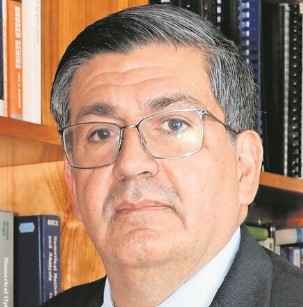 Carlos A.
Coello-Coello
(CINVESTAV-IPN, Mexico)
Carlos A.
Coello-Coello
(CINVESTAV-IPN, Mexico)
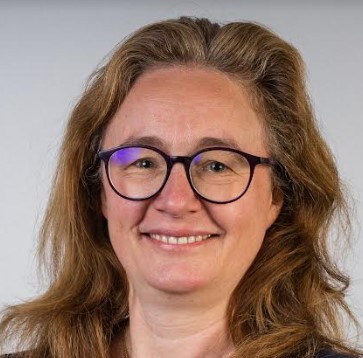 Clarisse
Dhaenens
(University of Lille, France)
Clarisse
Dhaenens
(University of Lille, France)
 Paola Festa
(University of
Napoli, Italy)
Paola Festa
(University of
Napoli, Italy)
 Martin
Charles Golumbic
(University of Haifa, Israel)
Martin
Charles Golumbic
(University of Haifa, Israel)
 Youssef
Hamadi (Tempero
Tech, France)
Youssef
Hamadi (Tempero
Tech, France)
 Milan
Hladik, Charles
University, Prague, Czech Republic
Milan
Hladik, Charles
University, Prague, Czech Republic  Laetitia
Jourdan
(University of Lille, France)
Laetitia
Jourdan
(University of Lille, France)
 Nikolaos Matsatsinis
(Technical University of Crete, Greece)
Nikolaos Matsatsinis
(Technical University of Crete, Greece)
 Hossein
Moosaei, Jan
Evangelista Purkyně University, Czech Republic
Hossein
Moosaei, Jan
Evangelista Purkyně University, Czech Republic  Panos
Pardalos
(University of Florida, USA)
Panos
Pardalos
(University of Florida, USA)
 Mauricio
Resende
(University of Washington, USA)
Mauricio
Resende
(University of Washington, USA)
 Meinolf
Sellmann
(InsideOpt, USA)
Meinolf
Sellmann
(InsideOpt, USA)
 Yaroslav
Sergeyev
(University of Calabria, Italy)
Yaroslav
Sergeyev
(University of Calabria, Italy)
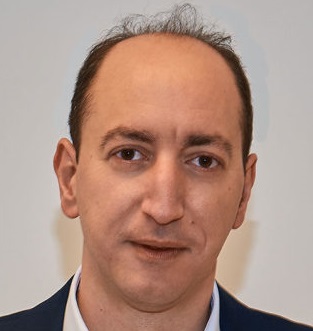 Dimitris
Simos (SBA
Research, Austria)
Dimitris
Simos (SBA
Research, Austria)
 Thomas
Stuetzle
(University of Bruxelles, Belgium)
Thomas
Stuetzle
(University of Bruxelles, Belgium)
 Kevin
Tierney (Bielefeld
University, Germany)
Kevin
Tierney (Bielefeld
University, Germany)  Yingqian Zhang,
Eindhoven University of Technology, The Netherlands.
Yingqian Zhang,
Eindhoven University of Technology, The Netherlands.